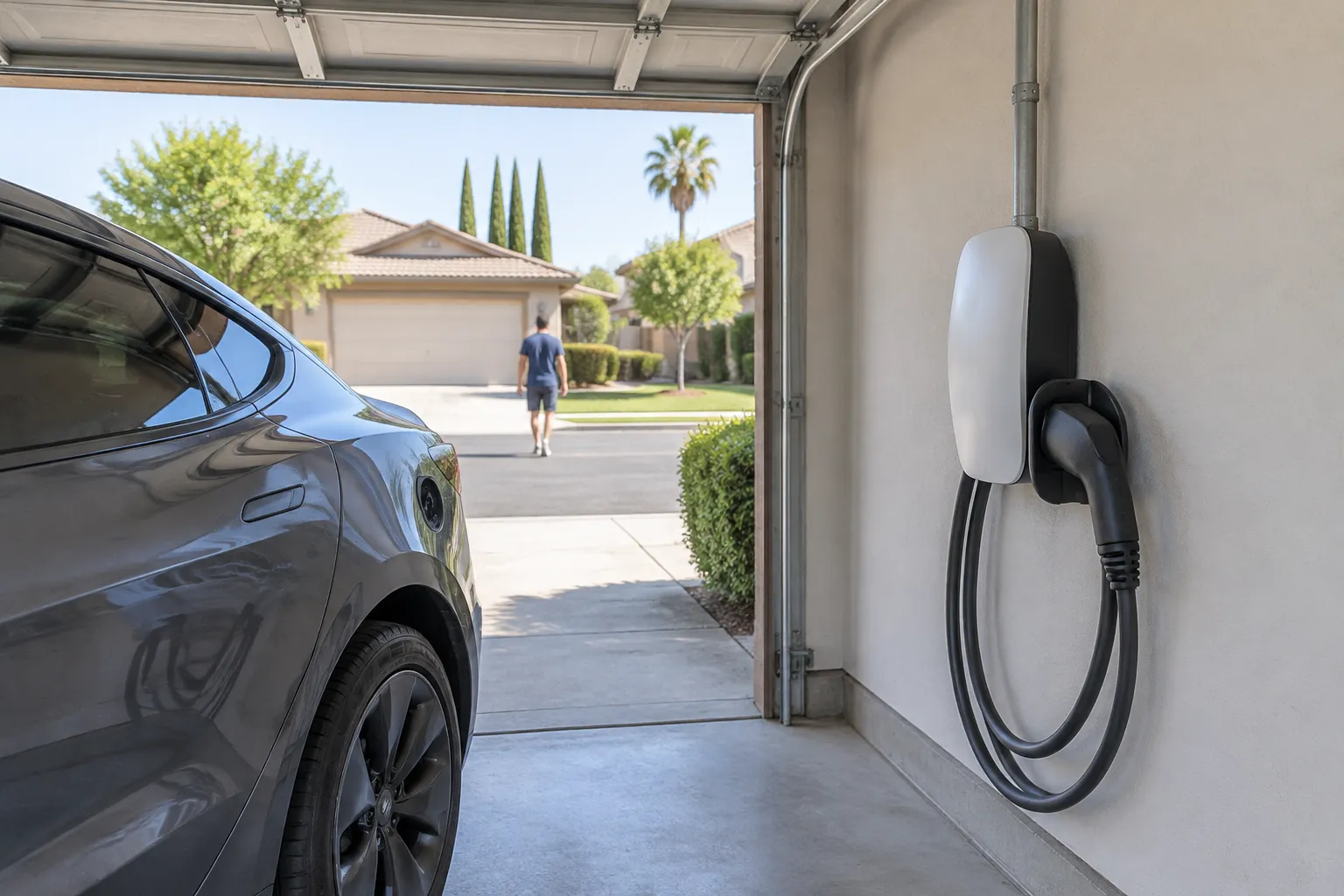
EV charger installation means adding a dedicated circuit to your home and mounting a charger, or a 240-volt outlet, where you park. A typical job in a house with spare panel capacity is a short run of heavy wire, a new breaker, a permit and an inspection. National price guides put a simple job at roughly $800 to $3,000, with a panel upgrade extra. You can get quotes from local electricians through this site. An electrician checks your panel first, because the panel decides almost everything else about the job. This page covers what the work involves, what to check and what to ask.
Can my home support a Level 2 charger?
Often yes, but an electrician has to check. A Level 2 charger runs on 240 volts and draws a large, steady load for hours. The question is whether your main panel has enough spare capacity for that load on top of everything else in the house. The U.S. Department of Energy notes that some homes may not have enough capacity for Level 2 and that a qualified electrician can determine this.
The electrician usually does a load calculation. That is a worksheet that adds up your panel size, major appliances and the new charger. Because the code treats EV charging as a continuous load, the new circuit is generally sized at 125 percent of the charger's rating. A 40-amp charger, for example, goes on a 50-amp circuit.
If the numbers do not work, you have options. A smaller charger setting can fit. A load management device can share capacity with other loads. Or the panel can be upgraded, which is the most costly route. Our guides to upgrading an electrical panel and what a replacement panel costs explain that path.
What wire do I need for a level 2 EV charger?
The wire is sized to the breaker, not just to the charger. A 50-amp circuit commonly uses 6-gauge copper wire, and a 60-amp circuit for a larger charger uses heavier wire than that. The electrician picks the size from the code tables, the length of the run and the way the wire is routed, in conduit or in a wall.
Here is how the pieces fit together.
| Charger rating | Typical circuit breaker | Usual connection |
|---|---|---|
| 32 amps | 40 amps | Hardwired or plug |
| 40 amps | 50 amps | Plug into a 14-50 outlet or hardwired |
| 48 amps | 60 amps | Hardwired |
Treat the table as a guide. The charger's own installation sheet and the electrician's code check decide the real numbers. A longer run needs thicker wire to avoid voltage drop, which raises the material cost.
What is the difference between a 240V outlet and a hardwired charger?
A 240V outlet lets you plug a portable or plug-in charger into the wall, much as you would a dryer. A hardwired charger connects straight to the circuit with no plug. Both need a dedicated 240-volt circuit with the right breaker, and both normally need an electrical permit.
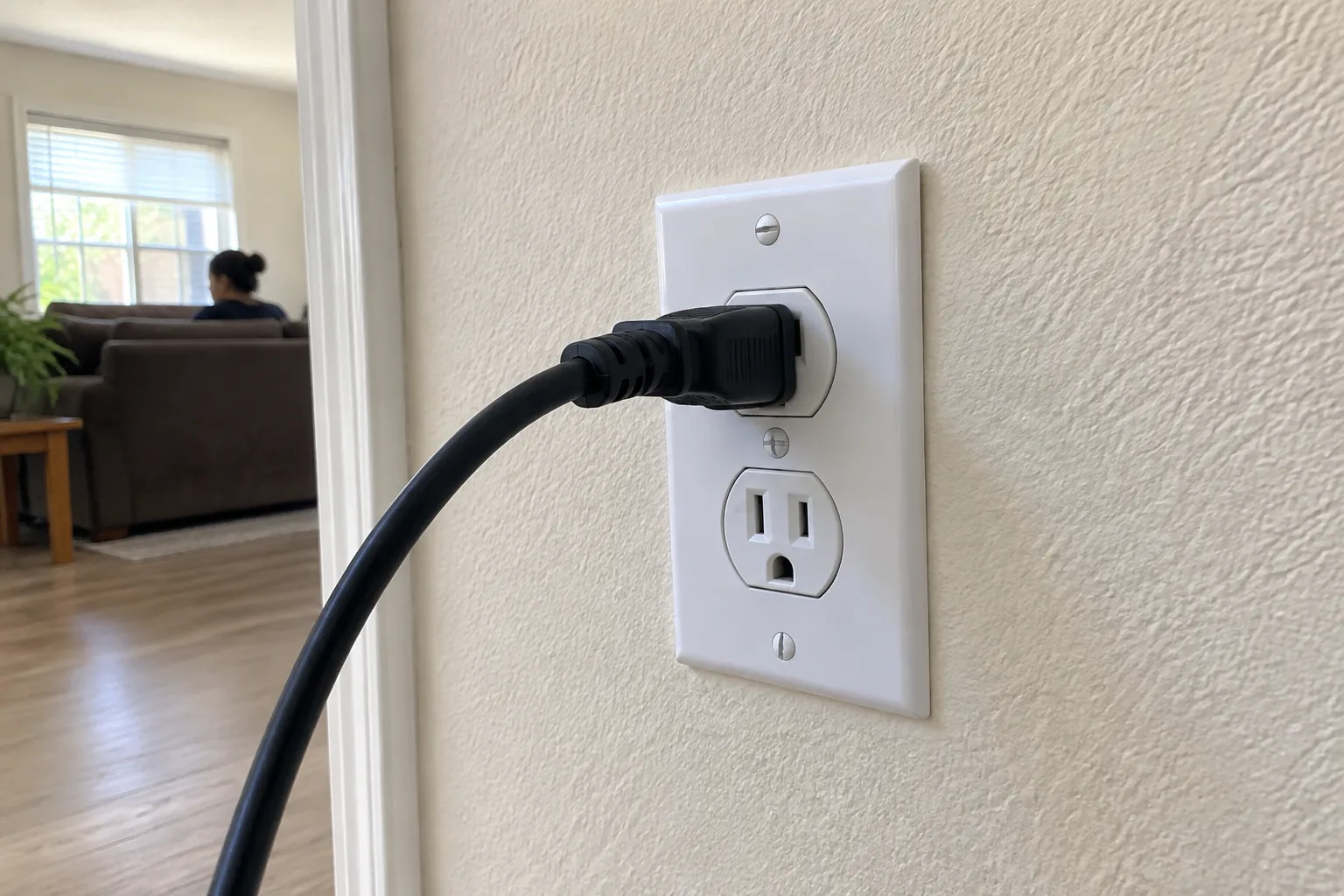
The outlet route can cost a little less up front and lets you take the charger with you if you move. Hardwired units suit higher power levels and outdoor mounting. The fixed connection also avoids a plug carrying heavy current for hours, where a loose contact can overheat.
You cannot just plug a car into any 240V outlet. The outlet must sit on its own circuit sized for a continuous load, and the electrician checks the existing wiring before any charger goes on it. Our page on who can install an EV charger explains the license and permit side.
What height should an EV charger be fitted at?
Codes and manufacturers set a minimum mounting height so the connector is out of the way of water and damage. Figures often cited are about 18 inches above the floor in a garage and about 24 inches outdoors, but the exact rule depends on the code edition and the product. The electrician follows the charger's instructions and the inspector's reading of the code.
Practical height matters too. Mount the charger so the cable reaches your charge port without stretching across a walkway. Many people mount at chest height on the wall beside the parking space. Think about where you will park the car in two years, not just today. Moving a hardwired charger later means more electrical work.
How far away from the fuse box should an EV charger be installed?
There is no single distance that suits every home. The charger can go wherever the circuit can reach, but a longer run costs more for wire, conduit and labor, and may need heavier wire to limit voltage drop. A charger on the garage wall shared with the panel is the cheapest case.
If the panel is on the far side of the house, or the parking is in a detached garage, the electrician may have to run conduit through walls, across an attic or under the ground. Trenching for a detached garage adds to the price. Ask each electrician to state the planned route and length on the quote so you can compare like with like.
What does EV charger installation cost?
National price guides put a simple installation near a panel at about $800 to $3,000, not counting the charger itself. Charger hardware runs roughly $100 to $800. Permit fees are set locally. A panel or service upgrade can add $1,500 to $4,000 or more. These are national figures, not Stockton quotes.
For a full breakdown by job type, see our guide to EV charger installation prices. To compare the market, use the price request form and ask two or three local electricians for itemized quotes.
What does the installation process look like in Stockton?
It usually runs in five steps. First, an electrician visits or reviews photos of your panel and parking spot. Second, you receive a quote that names the charger, the circuit size, the wire route and the permit. Third, the permit is filed with the city or county building department. Fourth, the work is done, often in one day. Fifth, an inspector signs it off.
Who issues the permit depends on where you live. Addresses inside the city limits go through the City of Stockton. Unincorporated addresses go through San Joaquin County. San Joaquin County states that a permit is required for installation, alteration, replacement and repair of electrical services and systems. Confirm the exact process for an EV charger with the building division that covers your address. Our page on what happens next shows how quotes work on this site.
Do the brand and the car change who can install the charger?
No. The same rules apply whatever brand of charger or car you have. In California the work is done for others by a contractor holding the C-10 electrical license, and the electrician follows the charger's own installation instructions. Some automakers, utilities or charger makers run partner installer programs, but those programs do not replace the license or the permit.
Location changes the rules more than brand does. Utility rates, rebates and permit forms differ by region, so guides written for other states or countries may not apply to a home in Stockton. Use local sources, and read the manufacturer's installation manual for the exact charger you plan to buy.
Can I install my EV charger myself?
In California, a homeowner may be allowed to do electrical work on their own home under an owner-builder exemption, but only with the required permit and inspection. The work involves 240 volts, heavy current and a continuous load. Mistakes can cause overheating, fire or shock. Most homeowners hire a local electrician.
The state contractor board says a license is needed for work that requires a building permit, uses employees, or costs $1,000 or more in labor and materials. If your charger job needs a permit and you hire someone, that person needs the license. Our page on choosing an electrician covers what to check. If you smell burning or see scorch marks near an outlet or panel, leave the area and call 911.
Questions people ask
Who is the biggest manufacturer of EV charging stations?
No single maker is worth naming here, and the choice matters less than the install. Several makers sell Level 2 home chargers, and most do the same basic task. Pick a unit with a recognized safety listing, a cable length that reaches your car and installation instructions your electrician will follow.
Can I just plug my EV into a 240V outlet?
Only if the outlet is on a circuit sized for it. A dryer outlet or an old outlet may not be wired or protected for hours of continuous charging. An electrician checks the circuit, the breaker and the wire first. Many homes need a new dedicated circuit and a permit before a plug-in charger goes on the wall.
Can I install my EV charger myself?
California law allows owner-builders to do some work on their own home, but the job generally needs a permit and an inspection. The risk is real: heat, fire and shock. Most owners hire a local electrician, who also knows what the inspector expects.
Can I get a free EV home charger?
Sometimes a charger comes with a car purchase or a program, but a free charger is uncommon. Utility rebates may reduce the cost. Check PG&E's rebates page for any current program before you buy.
What is the cheapest way to get a home EV charger?
Charging on a standard 120-volt outlet needs no new equipment if the outlet is on a suitable circuit, but it is slow. For faster charging, the cheapest route is a short circuit run from a panel with spare capacity, a plug-in charger on a new outlet, and several quotes. Avoid any job that skips the permit.
Can I charge off a standard outlet instead?
Yes, for slower charging. A standard outlet charges slowly. That can be enough for short daily trips. If you drive more, Level 2 gets the car ready overnight. Ask an electrician whether the outlet you plan to use is on a dedicated circuit.
Where can I learn how to charge for less energy cost?
PG&E offers time-of-use plans for EV owners. Its Home Charging EV2-A plan prices energy lowest from midnight to 3 p.m. and highest from 4 to 9 p.m. Eligibility rules apply. Check the plan on the PG&E site and set your charger or car to charge during the cheapest hours.
For general information about hiring an electrician in the area, visit Electrician Stockton Now or see the service areas page.
Read on
- EV charger cost
What EV charger installation costs: published price ranges for a 240V outlet, hardwired Level 2 charger, panel upgrades, permits, plus…
- Who can install an EV charger
Who can install an EV charger in California: the C-10 license rule, homeowner permit limits, what to ask in quotes and how to check a…
Sources used
- CSLB, Hire a Contractor
- CSLB, C-10 Electrical Contractor classification
- U.S. Department of Energy, Alternative Fuels Data Center, Charging at home
- PG&E, Electric vehicle rate plans
- San Joaquin County Community Development, residential electrical permits
- Electrical Construction and Maintenance magazine, EV charging systems
- Electrical Construction and Maintenance magazine, mounting height requirement for EV couplers
- Published 2025 and 2026 EV charger installation price guides
Last changed