If the reset button on an outlet will not click in, will not stay in or does nothing when you press it, the outlet is almost always a GFCI that has tripped, worn out or been wired wrong. Start with the other GFCIs and the breaker panel, because one tripped device can cut power to several outlets. Understanding the cause helps you decide what to try. If the button still will not reset, stop using that outlet and have a local electrician look at it. This page sits in the outlets, switches and GFCI guide and deals only with the reset button.
Why will my outlet reset button not reset?
A reset button that will not stay in usually means the GFCI is still detecting a fault, the device has worn out, or the line and load wires were swapped during installation. A faulty appliance plugged into the circuit can also keep it tripped. Unplug everything on the circuit first, then press reset again.
Work through the causes in this order:
- Something is plugged in that leaks current. A damaged cord, a wet tool or an old heater can trip the GFCI as soon as it resets. Unplug everything on that outlet and everything on outlets it protects.
- Moisture in the box or the device. Outdoor and garage outlets are the usual suspects, especially after rain or sprinklers.
- A wiring fault downstream. A damaged cable, a cut wire or water in a junction box can leak current to ground.
- The device has failed. GFCIs are electronic and they wear out. Safe Electricity notes that they can be damaged or wear out and recommends having a qualified electrician replace a faulty one.
- Line and load are reversed. This shows up on a new installation, covered below.
If the button never clicks at all, not even when you press it firmly, the mechanism is probably dead and the outlet needs replacing.
How do I reset the outlets in my house?
Press the TEST button on the GFCI, then the RESET button until it clicks and stays in. A working GFCI cuts power when you press test and restores it when you press reset. Check the panel as well, because a tripped breaker can look like a dead GFCI.
Use this order:
- Find every GFCI outlet in the kitchen, bathrooms, garage, basement, laundry area and outside. One of them may protect outlets in other rooms.
- Unplug what is connected to the dead outlets.
- Press reset firmly on each GFCI. The button should click and stay in.
- If nothing changes, open the panel. A tripped breaker sits halfway between on and off. Push it fully off, then fully on.
- Test the outlets with a lamp you know works.
If the GFCI resets, then trips again straight away or after a few minutes, you have a live problem and not a stuck button. Do not hold the button in or keep resetting. Breaker keeps tripping covers what a repeating trip usually means.
Why is my GFCI outlet not working after installing?
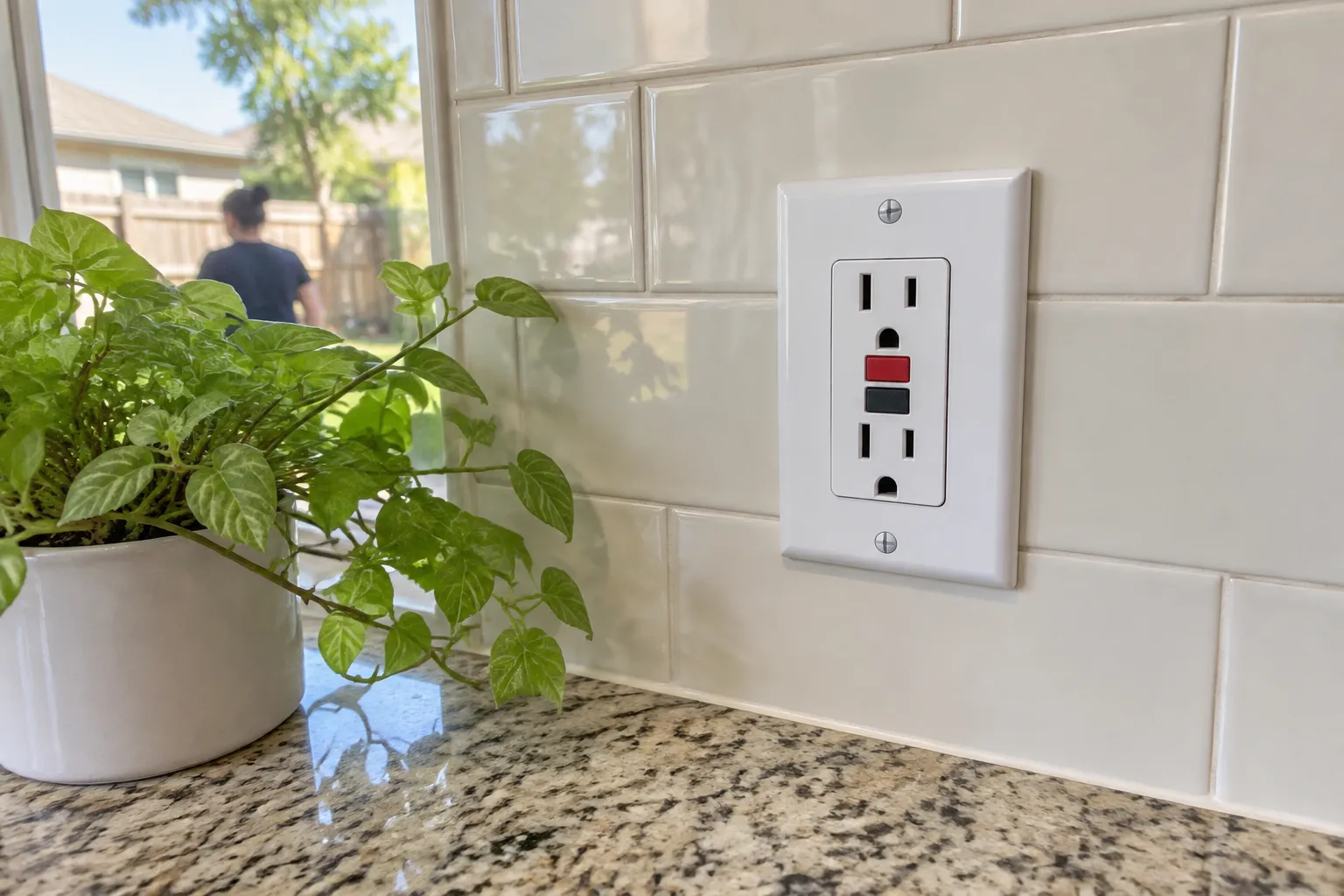
A new GFCI that will not reset after installation almost always has the line and load wires swapped, a loose connection or a mix-up with a downstream outlet. Line wires bring power in from the panel and load wires carry it onward, so the labels on the device matter. Turn the breaker off and ask an electrician to check the connections.
The common installation mistakes are:
- Power connected to the load terminals. The device may refuse to reset, or reset and not power anything.
- Neutral wires crossed between two circuits. This happens in shared neutral wiring and trips the GFCI at once.
- A loose or half-seated wire. Backstab push-in holes are known for this.
- A damaged device from the factory. Rare, but it happens. A new GFCI that will not reset out of the box is worth returning.
- A faulty circuit that was hidden by the old outlet. The previous outlet had no GFCI protection, so the leak never tripped anything.
The last one surprises many people. If an old outlet worked fine and the new GFCI trips, the new device may be doing its job and revealing a real fault. Treat that seriously. The step-by-step method is in the GFCI outlet installation guide.
Is the reset button working but the outlet is dead?
If the reset button clicks in but nothing has power, the GFCI may be failed internally, the wires behind it may have come loose, or the power may be off at the panel or at another GFCI upstream. Check the panel and other GFCIs first. A GFCI that resets but delivers no power usually needs replacing.
A few quick checks narrow it down:
- Do outlets on the same wall work? If none do, the breaker or an upstream GFCI is the likelier cause.
- Does the test button cut anything off? If pressing test does not click the reset out, the GFCI is no longer protecting you. Replace it, even if it still delivers power. Safe Electricity points out that an outlet can keep supplying power after its GFCI function has failed.
- Is it only one half of the outlet? A half-dead outlet can be a wiring or receptacle problem, not a GFCI problem. The outlet not working page covers that.
What should I fix myself and what should I leave to an electrician?
You can safely press buttons, unplug devices, check the panel and test with a lamp. Opening the outlet, swapping a GFCI or touching wires is work for you only if you are confident, you have shut off the breaker and confirmed it with a tester, and you meet the permit rules.
California law requires electrical work done for others to be performed by a contractor holding a C-10 electrical license from the Contractors State License Board. The board also describes an owner-builder exemption that lets an owner do work on their own property within limits. It does not remove the code or any permit requirement, so ask the City of Stockton permit center what your job needs. A like-for-like swap is treated differently from new wiring.
Call a local electrician if you see or smell any of these:
- Scorch marks, melted plastic or a burning smell at the outlet.
- A warm or hot outlet, or a hot cover plate.
- Buzzing, crackling or sparks.
- A GFCI that trips repeatedly with nothing plugged in.
- Water in the box.
If there is smoke, fire or someone has been shocked, call 911. For a downed line or a problem outside your home, call PG&E.
How much does it cost to fix an outlet reset problem in Stockton?
National price guides put replacing an existing outlet at about $80 to $350 and installing or replacing with a GFCI at about $100 to $300. Finding a hidden fault takes longer and costs more. A service call minimum often applies, commonly $100 to $200.
| Job | Typical range from national price guides |
|---|---|
| Replace an existing standard outlet | $80 to $350 |
| Replace or install a GFCI outlet | $100 to $300 |
| Service call minimum | $100 to $200 |
These are national figures and a guide only. The electrician's own quote overrides them. What moves the price: how many outlets are affected, whether the fault is in the device or in the wiring, how hard the wall is to reach and whether a permit is needed. The GFCI outlet installation cost page explains each line of a quote.
Many homeowners find that replacing a failed GFCI costs less than they feared. Finding why it trips costs more. If you live in or near Stockton and want a price, a local electrician in Stockton can look at the outlet and the circuit together.
Questions people ask
Can I just replace the GFCI outlet if the reset button is broken?
Yes, if you are comfortable doing it safely and the rules allow it. Switch off the breaker, confirm the wires are dead with a tester, and connect line and load as marked. If a new GFCI trips at once, stop. The fault may be in the wiring, and a local electrician should check it.
Why does my GFCI trip when it rains?
Water can get into outdoor boxes, covers and connections and leak current to ground, which trips the GFCI. A weatherproof in-use cover and sealed connections help. If it trips every time it rains, have an electrician inspect the box and cable for water damage instead of resetting it each time.
Is it dangerous to use an outlet with a broken reset button?
It can be. If the GFCI cannot trip, it no longer protects you from shock, even though the outlet still seems to work. Stop using it for anything near water and replace it. If the outlet is hot, smells or sparks, switch off its breaker and call a local electrician.
How long does it take to fix an outlet that will not reset?
Replacing a failed GFCI usually takes under an hour. Tracing a fault in the wiring behind it takes longer, and the electrician cannot tell how long until they have tested the circuit. Ask for the likely time with the quote.
Do I need to be home when the electrician fixes it?
Usually, yes, at least at the start and the end. The electrician needs access to the panel and the outlet, and you will want to see the test at the finish. Agree the details with whoever quotes the job.
Sources used
- Safe Electricity: Ground Fault Circuit Interrupters
- Contractors State License Board: owner-builder overview
- Published 2025 and 2026 online price guides for outlet and GFCI installation, checked November 2026
Last changed