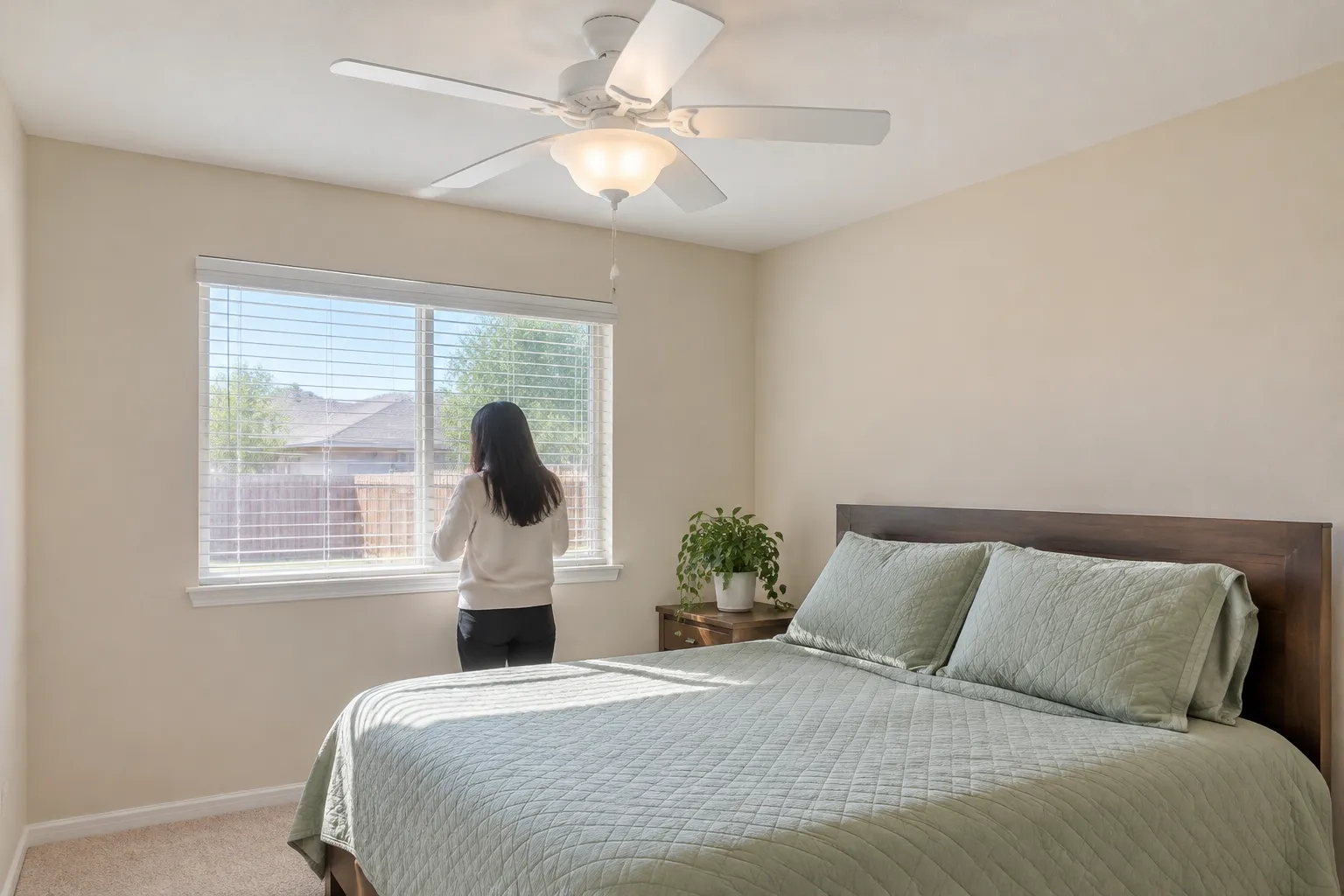
Replacing a ceiling fan on wiring that is already fan-ready usually costs about $100 to $400 for labor in national price guides. Installing a fan where there was none, with new wiring, runs from about $300 to $1,000 or more. These are national guide figures, not Stockton quotes, and a Stockton electrician's own quote overrides them. This page is the price side of lighting, fans and fixtures, and it explains what moves the cost up or down.
How much does it cost to install a ceiling fan?
Most national price guides land near $100 to $400 for a straightforward swap, with the fan bought separately. A new installation with new wiring is wider, from about $300 to $1,000 or more. The fan itself is extra, from under $100 for a basic model to several hundred dollars for a large or designer one.
| Job | Typical range in national price guides | Notes |
|---|---|---|
| Replace a fan with a fan, fan-rated box in place | $100 to $400 | Labor only, fan bought separately |
| New fan, new wiring | about $300 to $1,000 | Attic or wall work, switch, patching |
| Add remote or wall control | $75 to $300 extra | Separate fan and light switching |
| Vaulted or high ceiling | about $50 to $250 extra | Taller ladder, longer downrod |
Labor rates quoted in these guides run from about $50 to $130 an hour, and handyman rates are lower. Prices from different guides vary a lot. Many are written by contractors or lead-generation sites, so use the figures as a rough band and not a target.
What changes the price of a ceiling fan installation?
Five things move the price most: whether a fan-rated box is already there, whether wiring exists at the spot, how high the ceiling is, how many switches are involved and how much patching the ceiling needs. A fan that replaces a fan on a sound box is the cheapest case. Any new cable run or box change adds time and materials.
Look at each factor:
- The box. A fan needs a box made to carry it. If your old light box is not, an electrician adds a brace or swaps the box. See ceiling fan installation wiring for what that involves.
- Wiring. No wiring at the ceiling means cable from a switch or another box, often through an attic.
- Ceiling height. High or sloped ceilings need extra gear and time.
- Controls. A wall switch for fan and light, a remote or a smart control adds labor.
- Fan weight and type. Heavy fans, outdoor fans and low-profile fans each have their own mounting needs.
- Disposal and cleanup. Removing the old fan or fixture sometimes costs extra.
California law requires a C-10 electrical contractor for work done for others where labor and materials reach $1,000 or a permit or workers are involved. A new fan on new wiring can cross that line, which is another reason to ask for the license number and compare quotes.
How much to install a ceiling fan without existing wiring?
Expect roughly $300 to $1,000, and more for hard access. Without existing wiring, an electrician must run cable from a power source to a new box, usually through the attic, and may cut and patch drywall. The same job is much cheaper with attic access above the room and much more expensive with a finished floor above.
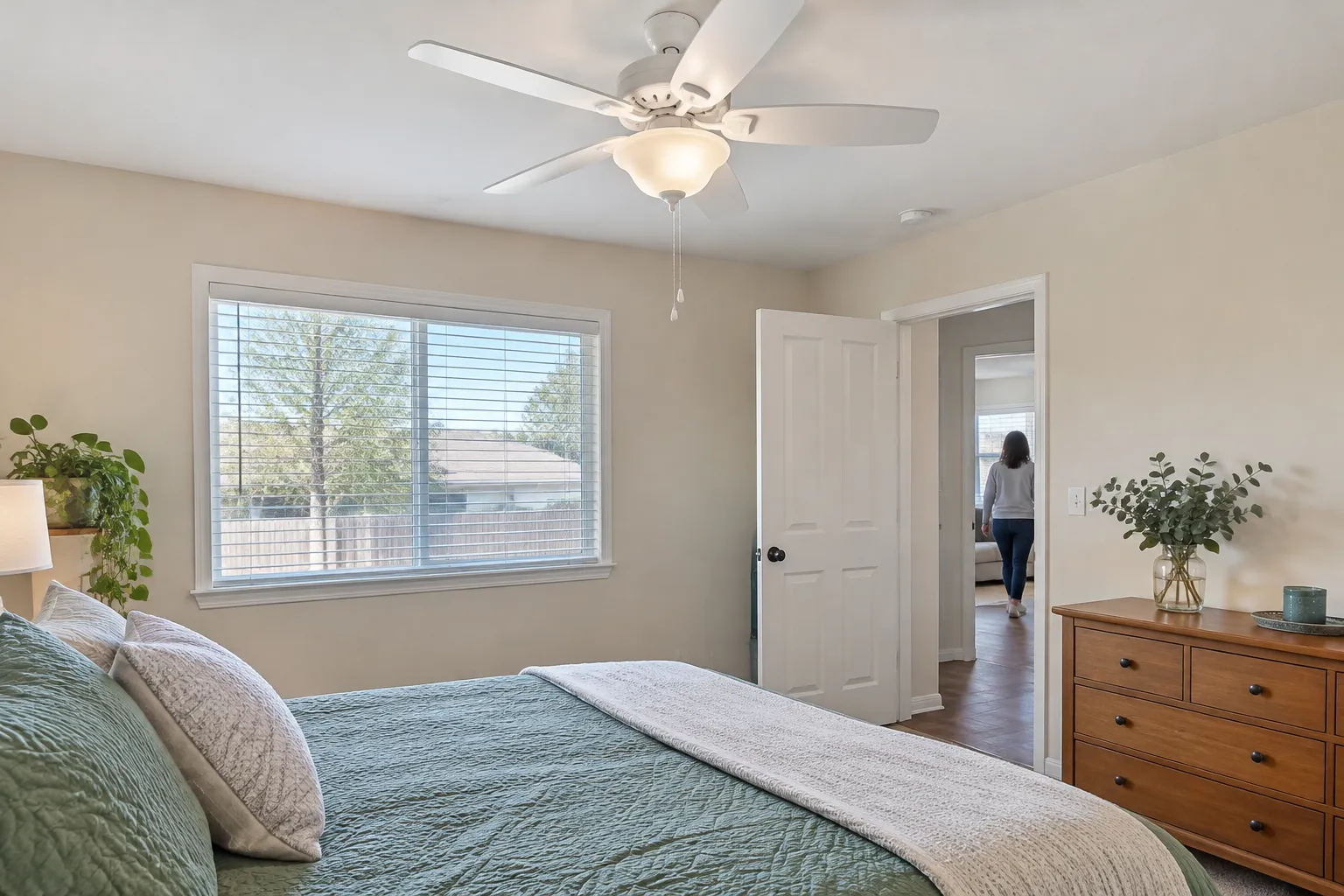
If the fan replaces a light, the wiring is often there already, and the main extra is the box. If the room has no light at all, you also need a switch and a path for cable to it. Get a site visit before you commit. A price over the phone for a no wiring job is a guess. Some electricians lower the cost by using an existing circuit nearby, and that depends on the load it already carries.
For a closer look at the wiring and the support box, read the guide linked earlier in this page.
How much does it cost to put a fan in a bathroom?
A bathroom exhaust fan swap on existing ducts is the low end, and a first-time installation with a new duct run and a roof or wall cap costs more. National price guides give a wide range, so rely on a local quote. The cost depends on duct length, attic access, where the duct exits and the switch.
An exhaust fan is a different product from a ceiling fan. It removes moisture, and the duct should discharge outdoors, not into the attic. The fan housing holds the fan to the joists. A bathroom fan with a light, heater or humidity sensor costs more. A ceiling fan in a bathroom is only allowed if it is rated for damp locations, and it is not a replacement for an exhaust fan.
What do electricians charge to change a ceiling light or install a fixture?
Replacing a ceiling light on existing wiring is a small job, usually a small job and cheaper than a fan swap in the guides we read, though pricing varies by fixture and ladder height. Swapping a bathroom vanity light or a wall fixture is similar. Cost rises with a heavy chandelier, a high ceiling, old wiring or a new location that needs new cable.
Cost guides also report higher figures for these fixture jobs:
- Heavy chandeliers or pendants: extra time and a proper support.
- Wall mount fixtures: moderate, unless a new box is needed.
- Rewiring a chandelier: priced by the job, and often quoted after a look.
- Outdoor fixtures: more, because of weather rated boxes and sealing.
Fixtures are sold separately, and you usually buy them yourself or ask the electrician to supply them. A like-for-like swap by a homeowner on their own home is common. The edge is the $1,000 rule: the law lets an unlicensed person take small jobs under $1,000 only with no hired workers and no permit.
What does recessed lighting cost compared with a fan?
Recessed lights in an existing ceiling run about $150 to $350 per light in national price guides, and a room of four to six lights often totals about $1,000 to $3,000. That is higher per opening than a fan because each light needs its own hole and cable run. The recessed lighting cost guide has the full breakdown.
If you want to price lighting for the same room as a fan, quote both together, because the electrician may share the attic trip and the permit. For a full table of what lights cost, see recessed lighting installation cost. For how to compare bids from different people, see how to choose an electrician. For general pricing, read what an electrician costs in Stockton.
Questions people ask
How long does ceiling fan installation take?
A fan swap on a good box often takes one to two hours. A new fan with new wiring takes half a day or more, depending on attic access and patching. Assembly of the fan before it goes up also takes time, so ask whether the quote includes it.
What should I ask before I hire someone for ceiling fan installation?
Ask whether the quote includes the fan box or brace, a switch, patching and haul-away of the old fan. Ask who holds the C-10 electrical license, whether a permit is needed and what the price is if the ceiling needs extra work. Get the quote in writing.
Do I need to be home for ceiling fan installation?
Yes, usually at the start to point out the room and the switch, and at the end to test the fan and sign off. The electrician needs access to the attic or space above. Move furniture and cover the floor under the work area before they arrive.
Does the fan price include the fan?
Usually not. Most published labor ranges assume you buy the fan. Some electricians supply one at a markup, which can be fine if it saves you a trip. Ask for the fan price and the labor price separately so you can compare.
Is a handyman cheaper than an electrician for a ceiling fan?
A handyman usually charges less per hour, and California allows small jobs under $1,000 without a contractor license if there are no workers and no permit. A fan on new wiring often needs more. For anything past a simple swap, the law and the safety stakes favor an electrician with a C-10 license.
To see which price fits your ceiling, ask local electricians in Stockton to quote it.
Sources used
Last changed