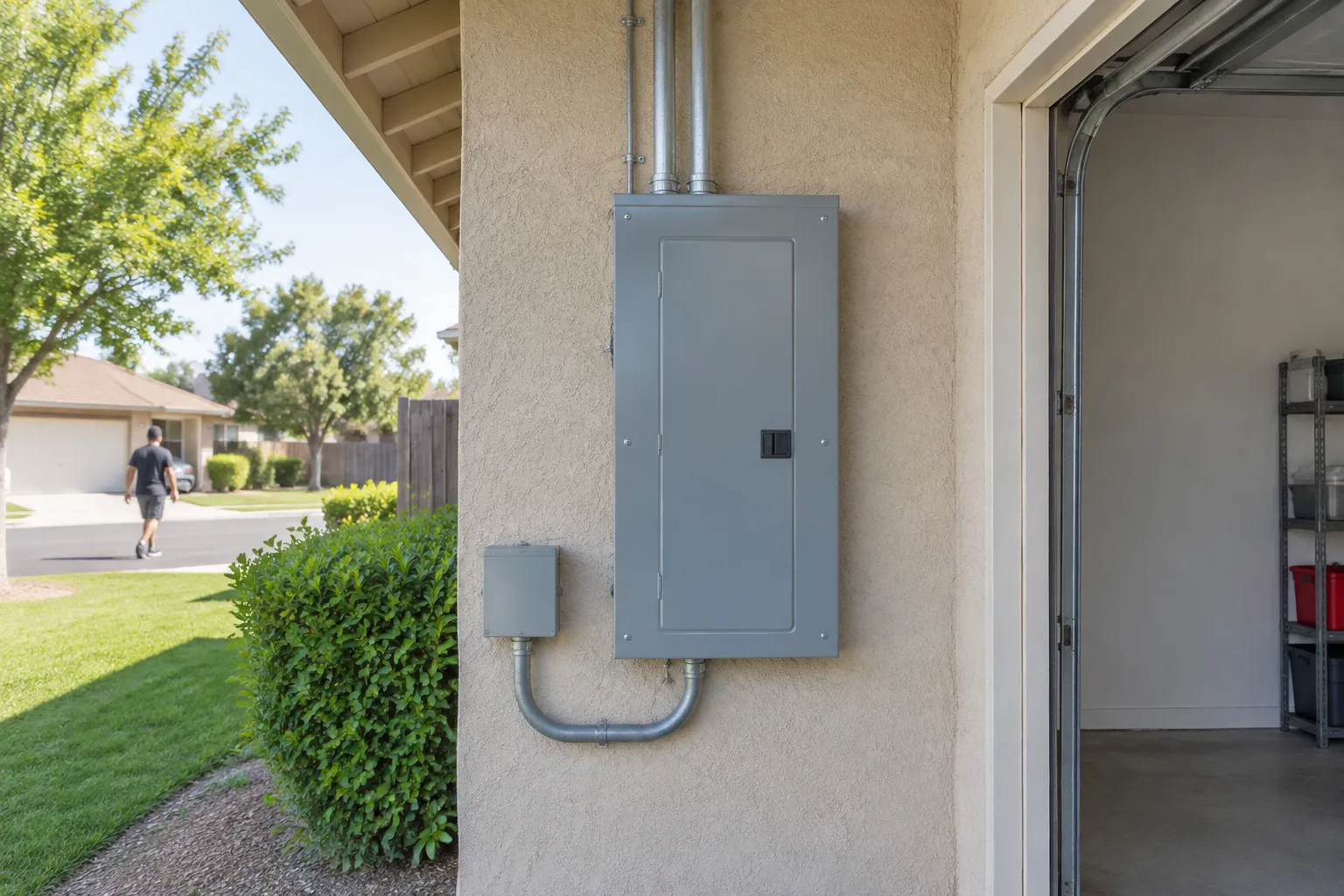
You can safely do small electrical tasks that involve no wiring behind a cover: changing a bulb, resetting a tripped breaker once, testing a GFCI outlet, replacing a smoke alarm battery and replacing a damaged lamp or extension cord with a new one. Anything that means opening a panel, running or splicing wire, adding a circuit or working inside a wall is a job for a California C-10 electrician, and much of it needs a permit. If you decide to hire, Electrician Stockton Now can quote the work.
What electrical repairs can you do yourself?
You can safely do repairs that keep you away from live wiring: swapping a bulb, resetting a breaker once, pressing the test and reset buttons on GFCI outlets, replacing batteries in smoke alarms and replacing a worn lamp or cord with a new one. If a repair needs a screwdriver on a live circuit or a cover removed from a box, stop.
Here is a practical split for a house:
| Usually fine to do yourself | Leave to a C-10 electrician |
|---|---|
| Change a light bulb, with the fixture off and cool | Add a new circuit or outlet |
| Reset a tripped breaker, once | Work inside the breaker panel |
| Test and reset a GFCI outlet | Replace a breaker that keeps tripping |
| Replace a smoke alarm battery | Splice or extend wiring inside walls |
| Plug in a surge strip or a replacement lamp | Replace an old fuse box or panel |
| Unplug a faulty appliance and stop using it | Anything involving knob-and-tube or aluminum wiring |
Even the simple tasks have rules. Switch the power off at the breaker if you will touch a fixture or device, and confirm it is dead with a tester. Stand on a dry floor. Keep water away. If something sparks, smells of burning or feels hot, stop and call a professional, or 911 if there is smoke or fire.
A good habit is to test GFCI outlets once a month. Press the test button; the reset button should pop out and the power to that outlet should cut. If it does not, the outlet needs replacing. For what the two types of protection do, see AFCI vs GFCI.
What does California law say about doing your own electrical work?
In California, an owner may do work on their own property without a contractor license under the owner-builder exemption, as long as the work is done by the owner or the owner's employees paid wages and the structure is not built for sale. CSLB lists conditions and limits. You still need to follow local permit rules, which the building department sets.
CSLB's owner-builder page says an owner-builder is exempt from licensure, with limitations, and it does not address electrical work or permits. For those, it points you to your local building department. That is the City of Stockton if your house is inside the city, or San Joaquin County if it is in unincorporated areas. Confirm what applies before you start.
What the law says about hiring others:
- Electrical work for others requires a contractor holding a C-10 license. CSLB describes the class as placing, installing, erecting or connecting electrical wires, fixtures, appliances and related equipment.
- The $1,000 minor-work exemption lets a person without a license do small jobs under $1,000 total, but only if no building permit is needed and no workers are hired. If a project under $1,000 needs a permit or workers, the proper license is required. That makes it a poor fit for most electrical work.
- Penalties for contracting without a license include fines and jail time, according to CSLB.
A friend or neighbor who is handy does not hold a C-10 license. If you pay them for electrical work, you may be hiring a person without a license. If you hire someone, check the license on the CSLB site. How to choose an electrician explains how.
If you rent, do not change wiring at all. Tell your landlord or building manager about the fault. They are usually responsible for the repair.
Which electrical repairs need a permit?
Many electrical repairs beyond like-for-like swaps need a permit. The California Building Standards Code requires a permit from the building official before most buildings are altered, repaired or improved, and requirements differ by city and county. Adding circuits, replacing a panel or service and rewiring typically need one; a cosmetic swap often does not.
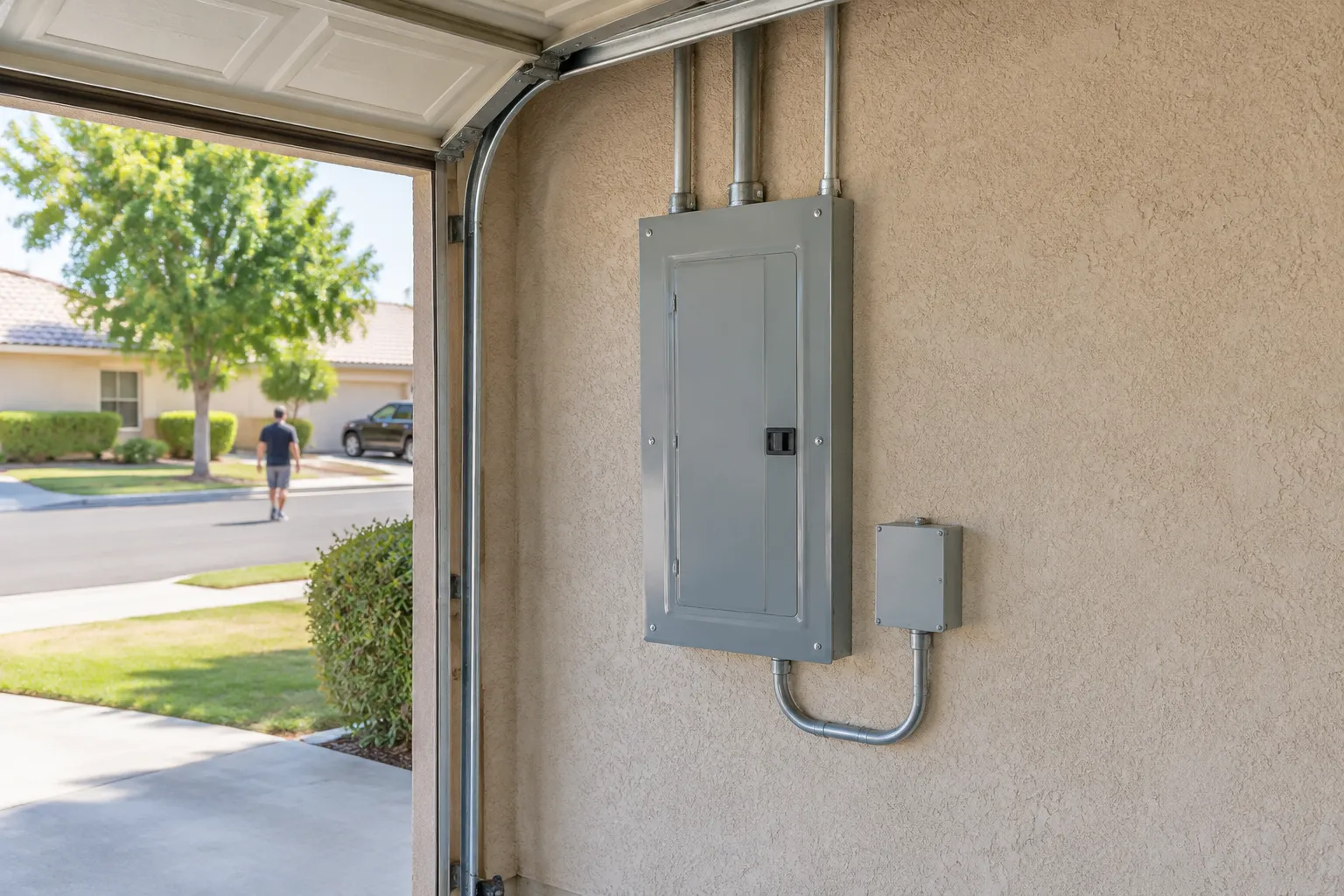
Ask the City of Stockton Community Development building staff what your project needs, because rules vary by city and county.
Why it matters:
- Safety: an inspector checks the work after you finish.
- Insurance: unpermitted work can complicate a claim after a fire.
- Sale: buyers and inspectors may ask for permit records.
For a sense of what an inspection involves, see residential electrical inspections.
Can you repair a damaged extension cord?
No. The U.S. Consumer Product Safety Commission advises replacing cracked or worn cords, and throwing away a cord that feels hot to the touch. Taping over damaged insulation or splicing a cord is not a safe repair. Replace it with a new cord rated for the load, and use cords only temporarily.
CPSC also says not to overload cords with too many appliances, and not to use extension cords to make up for inadequate wiring. If you rely on extension cords every day because a room has too few outlets, that is a wiring problem. A local electrician can add outlets; see outlet not working for outlet faults, and book the extra outlets as a separate job.
Cord checks worth doing today:
- Run your hand along each cord to feel for cracks, heat or soft spots.
- Check plugs for bent or loose prongs and discoloration.
- Replace any cord that feels warm in normal use.
- Use outdoor-rated cords outside and a GFCI-protected outlet.
- Never run a cord under a rug or through a door that closes on it.
What are the warning signs that a repair is not a DIY job?
Call an electrician, not a screwdriver, when you see a breaker that trips repeatedly, outlets or switch plates that are warm or discolored, a burning smell, buzzing, flickering lights across many rooms or mild shocks from appliances. These point to a fault in the wiring or panel that you cannot see.
Examples and where to look next:
- A breaker that trips again straight after resetting: breaker keeps tripping.
- Lights that dim or flicker in more than one room: flickering lights.
- A house built before the 1950s with cloth-covered wiring or ceramic knobs in the attic: what is knob-and-tube wiring.
If you see smoke, flames or a burning smell that does not clear, leave the house and call 911. After a power failure, PG&E advises unplugging or turning off appliances to avoid overloading circuits when power returns. If the problem is a downed line, stay away and call 911, then PG&E.
How do you get an electrician for the repairs you should not do?
Describe the fault, the age of the house and what you have tried, then ask local electricians for written quotes. Get at least three for larger work, check the CSLB license record and ask who pulls the permit. A schedule that fits you also matters, since many small jobs can be bundled into one visit.
You can send one request through the quote form and compare the replies. A typical electrician works on residential and sometimes commercial jobs, so ask who will actually come to your house. Bundling several small fixes saves repeated service call fees.
Questions people ask
How long does an electrical home repair take?
A small repair such as replacing an outlet or switch often takes under an hour once the electrician is on site. Tracing a fault or replacing a fixture can take a couple of hours. Larger work, such as a new circuit or a panel upgrade, takes a day or more and may need a permit and inspection.
What should I ask before I hire someone for an electrical repair?
Ask for the CSLB license number and check it, whether the electrician has workers' compensation if they bring a helper, what the service call fee is and whether the price is written. Ask who will pull the permit. A down payment cannot exceed 10 percent of the price or $1,000, whichever is less.
Do I need to be home for an electrical repair?
Usually yes, at least at the start and end. The electrician needs access to the panel and the fault, and you should agree the price before work starts. If you cannot be there, ask a trusted adult to stay, or tell the landlord if you rent.
Is it legal to fix my own electrical problems in California?
Owners may do work on their own property under the owner-builder exemption, with limits, and local permit rules still apply. The law does not let you do electrical work for others without a C-10 license. Check with the City of Stockton before you start, and leave panel and in-wall work to an electrician.
Is it safe to repair an extension cord with tape?
No. CPSC advises replacing cracked or worn cords and discarding any cord that feels hot. Tape does not restore the insulation, and a repaired cord can overheat. Buy a new cord rated for the load you need and use it only temporarily.
Sources used
- CSLB, owner-builder overview
- CSLB, do I need a building permit for my project
- CSLB, C-10 Electrical Contractor classification
- CSLB, handyperson exemption press release (December 2024)
- U.S. Consumer Product Safety Commission, faulty extension cords, power strips and surge protectors
- PG&E, severe weather safety
Last changed