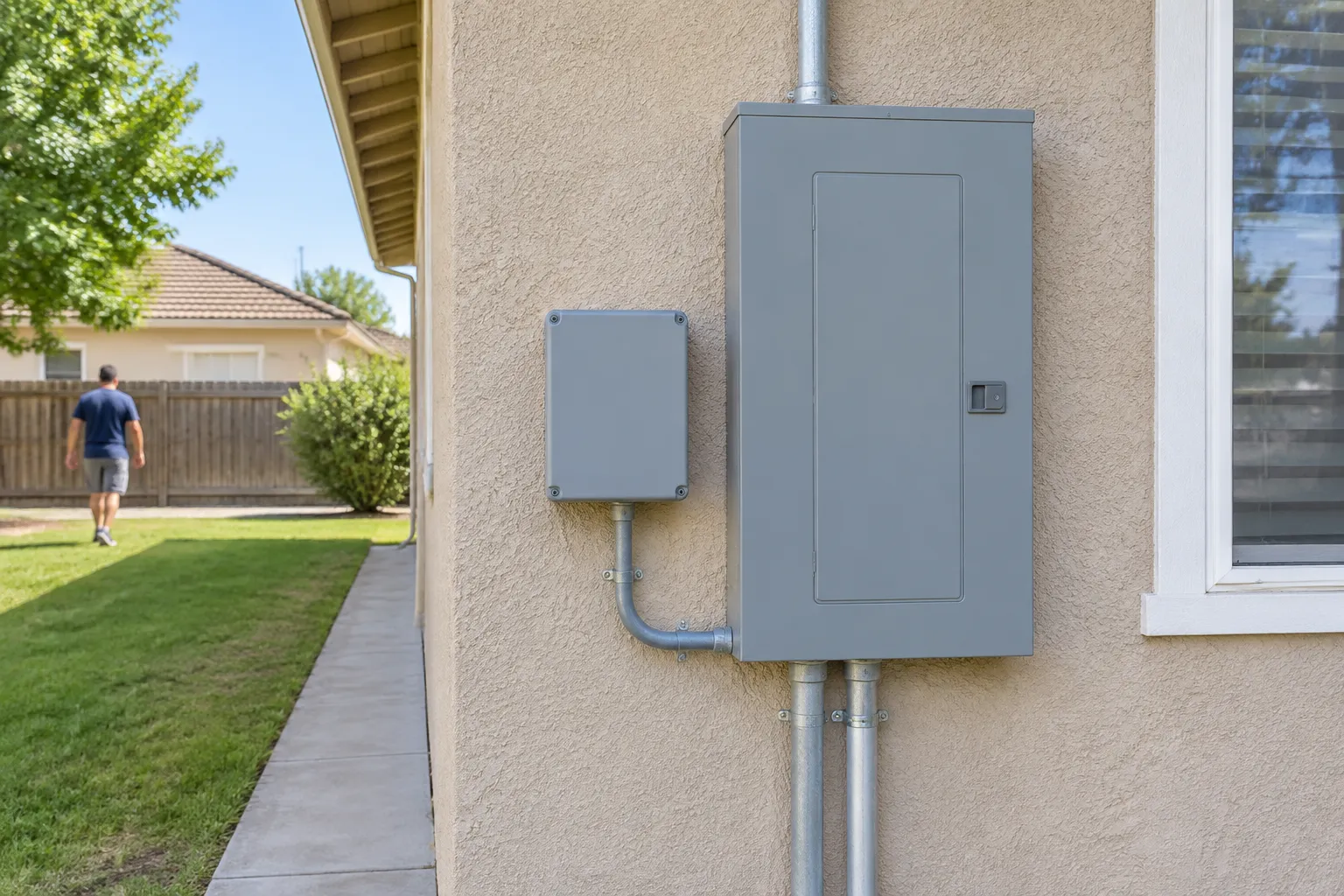
A whole-house surge protector is a device wired into your main electrical panel. It clamps the extra voltage from power surges before it spreads through the house wiring to your electronics and appliances. National price guides put the installed cost at about $200 to $800. It does not replace the plug-in strips at your desk, and it cannot stop a direct lightning strike. You can get quotes from local electricians through this site. The sections below cover how it works, what to protect, and when it is worth the money.
How does a whole-house surge protector work?
It sits at the panel and watches the voltage on the incoming lines. When voltage jumps above a safe level, the device diverts the extra energy to ground in a fraction of a second, so less of it reaches the wiring. Inside are components that act like a pressure valve: normal power passes, excess is shunted away.
A surge protector wears out as it absorbs hits. Most have a status light that shows whether the protection is still working. How long a unit lasts depends on how often surges hit and how strong they are. Check the light now and then, and ask an electrician to replace the unit if it shows a fault. Our guide to installing a whole-house surge protector explains how the device is wired in.
What is the difference between a whole-house unit and a plug-in strip?
A whole-house unit protects the whole electrical system at one point. A plug-in strip protects only what is plugged into it. They work as a pair. The panel unit takes the big hits from outside, and the strip near sensitive electronics catches what gets through and surges created inside the home.
Surges come from two places. External surges come from the utility lines, lightning in the area, or equipment switching on the grid. Internal surges come from your own motors starting and stopping, such as an air conditioner or a refrigerator compressor. A panel unit handles the first kind well. For the second kind, a point-of-use strip helps. Surge devices are grouped into types under the UL 1449 standard, and plug-in strips are generally the point-of-use type.
Are whole-house surge protectors worth it?
For many homes, yes, because they protect wiring, appliances and electronics that would cost far more than the device. The case is strongest if you have expensive electronics, an area with frequent storms or grid switching, or an older home with little protection. The case is weaker if your wiring is already protected or you rent and cannot change the panel.
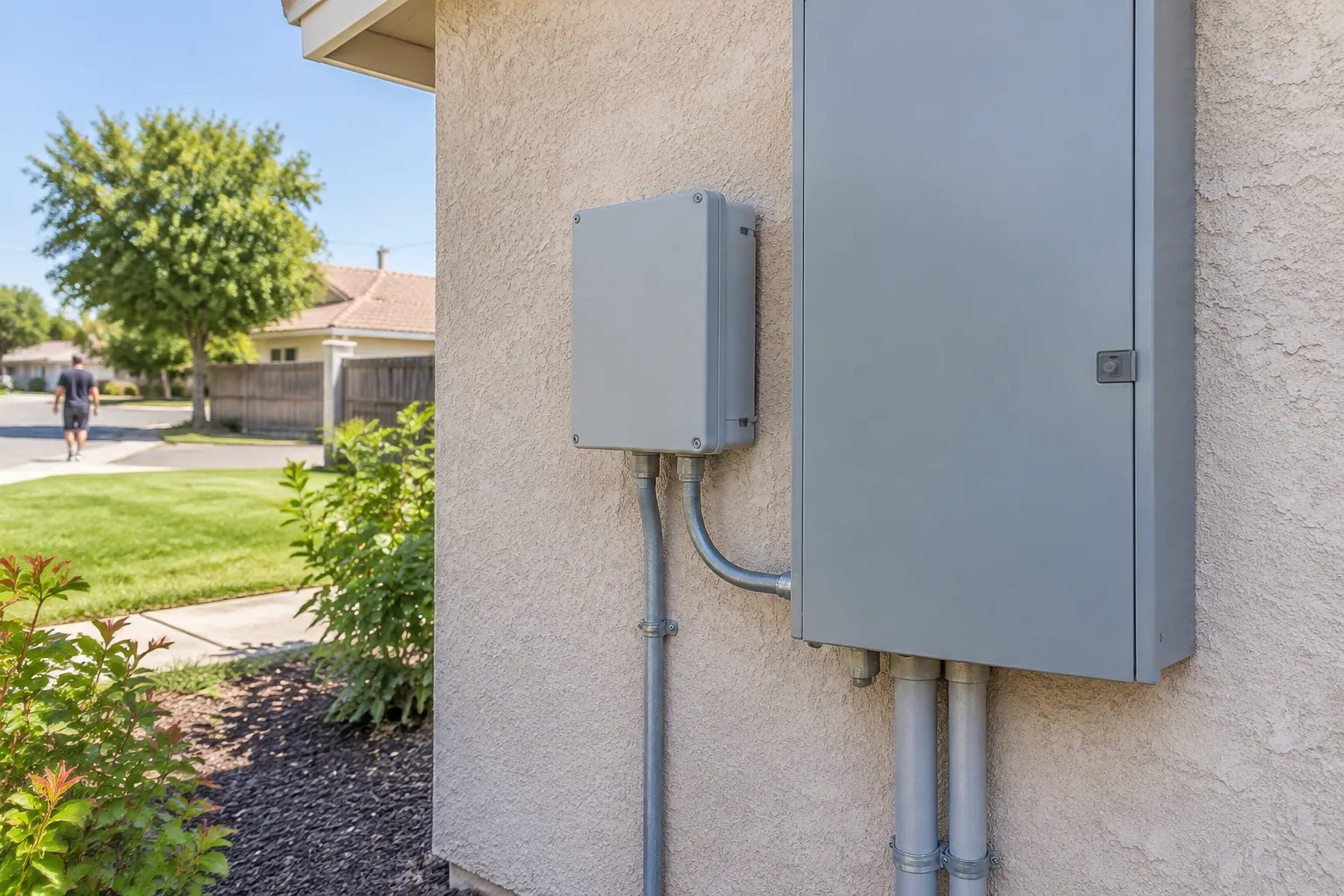
Be honest about limits. A whole-house unit reduces the risk. It cannot promise that nothing will be damaged, and a direct lightning strike can overwhelm any surge device. Some insurers and manufacturers offer connected-equipment warranties on certain products. Read the terms before you rely on one. If you have had a past surge that fried an appliance, that is a strong sign to ask an electrician about one.
For a price breakdown, see the whole-house surge protector cost guide.
Does the code require a whole-house surge protector?
For services supplying dwelling units, National Electrical Code section 230.67 requires a surge protective device of Type 1 or Type 2, built into the service equipment or placed right next to it. That rule became mandatory in the 2020 edition of the code, and replacing service equipment can trigger it too. California adopts the national code with state changes, and local building departments enforce it, so confirm the current rule with the City of Stockton or San Joaquin County.
If you are not replacing the service, a surge protector is generally an optional upgrade, not a mandate. If your home needs a new panel, the surge protector is likely part of the job. Our guide to residential electrical panel upgrades covers that case. Ask your electrician whether the permit for the panel work covers the surge device too.
Who makes the most reliable surge protectors?
Reliability depends on the model, not only the maker. Look for a device that carries a recognized safety listing, a status indicator, a low voltage protection rating and a surge current rating suited to your home. A good fit is a unit made for your panel, from the same maker or approved for it.
Panel makers sell their own surge devices designed to fit their panels, and several independent makers sell units as well. I am not naming brands, because the best choice depends on your panel. Ask the electrician which unit fits your panel, what the voltage protection rating is, and what warranty applies. A longer warranty on the unit and a clear label for the surge current rating are useful comparison points.
What should you never plug into a surge protector?
Do not plug in space heaters, hair dryers, toasters, coffee makers, or other high-wattage heating appliances. They draw heavy current that can overheat a strip. Do not daisy chain one strip into another. Check the strip's rating and the appliance label. Heavy appliances are best plugged straight into a wall outlet.
Manufacturers of refrigerators and large appliances often say to plug them directly into the wall, so check the owner's manual. A strip with a tripped or failed protection light should be replaced, because it can still pass power while offering no protection. If a strip or outlet feels hot, smells of burning or shows scorch marks, unplug it if you can do so safely, leave the area and call 911 if there is smoke or fire.
Is it safe to leave a surge protector plugged in all the time?
Yes, as long as it is in good condition, not overloaded and not covered. Surge strips are made to stay plugged in. Replace one that is old, damaged, has a failed protection light or has taken a major surge. Never run a strip under a rug or behind furniture where heat can build up.
A whole-house unit stays connected permanently. Check its status light every few months. If the light is off or red, call a local electrician. See our guide to a circuit breaker that keeps tripping if a panel problem is the reason you are looking at your electrical system.
Questions people ask
What should never be plugged into a surge protector?
High-wattage heating appliances such as space heaters, toasters and hair dryers, and any other surge protector or extension cord. Large appliances like refrigerators are often best plugged directly into the wall, according to many manufacturers. Check the owner's manual and the strip's rating.
Are whole home surge protectors worth it?
For most homes with valuable electronics and appliances, they are a reasonable protection at a modest cost. They cannot stop every surge, and they wear out over time. Weigh the installed price of about $200 to $800 against what you would lose, and ask an electrician about your panel.
What does it cost for a whole house surge protector?
National price guides put a professionally installed unit at roughly $200 to $800, with the device itself often $60 to $300. Panel condition and extra work move the price. The cost guide has the full breakdown.
What is a good voltage for a surge protector?
Homes in the United States are supplied at 120 and 240 volts, so a whole-house unit must match your service. The number to compare is the voltage protection rating on the label: a lower rating means less voltage passes through during a surge. Your electrician will pick a unit rated for your panel.
Can a refrigerator be plugged into a surge protector?
Many refrigerator makers advise plugging the unit straight into a wall outlet, so follow the owner's manual. A whole-house unit protects the refrigerator circuit without a strip. If a strip is allowed, use one rated for the load.
Is a whole-house surge protector the same as an EMP shield?
No. Surge protectors are made for voltage spikes from the grid, lightning nearby and switching. Products sold as shields against rare events are a different category, and I did not find official testing to back broad claims. Ask an electrician before you buy one.
For more on local electricians, start from an electrician in Stockton and use the price request form to compare quotes.
Read on
- Installing a surge protector
How a whole house surge protector is installed: Type 1 and Type 2 devices, where it connects, who may do the work in California, permits…
- Surge protector cost
What a whole house surge protector costs installed: published price ranges for the device and the electrician, what pushes the price up or…
Sources used
- Surge protection requirements under the 2023 NEC, section 230.67 (code-training summary)
- UL 1449 surge protective device types, summary
- San Joaquin County Community Development, residential electrical permits
- CSLB, Hire a Contractor
- Published 2025 and 2026 whole-house surge protector price guides
Last changed