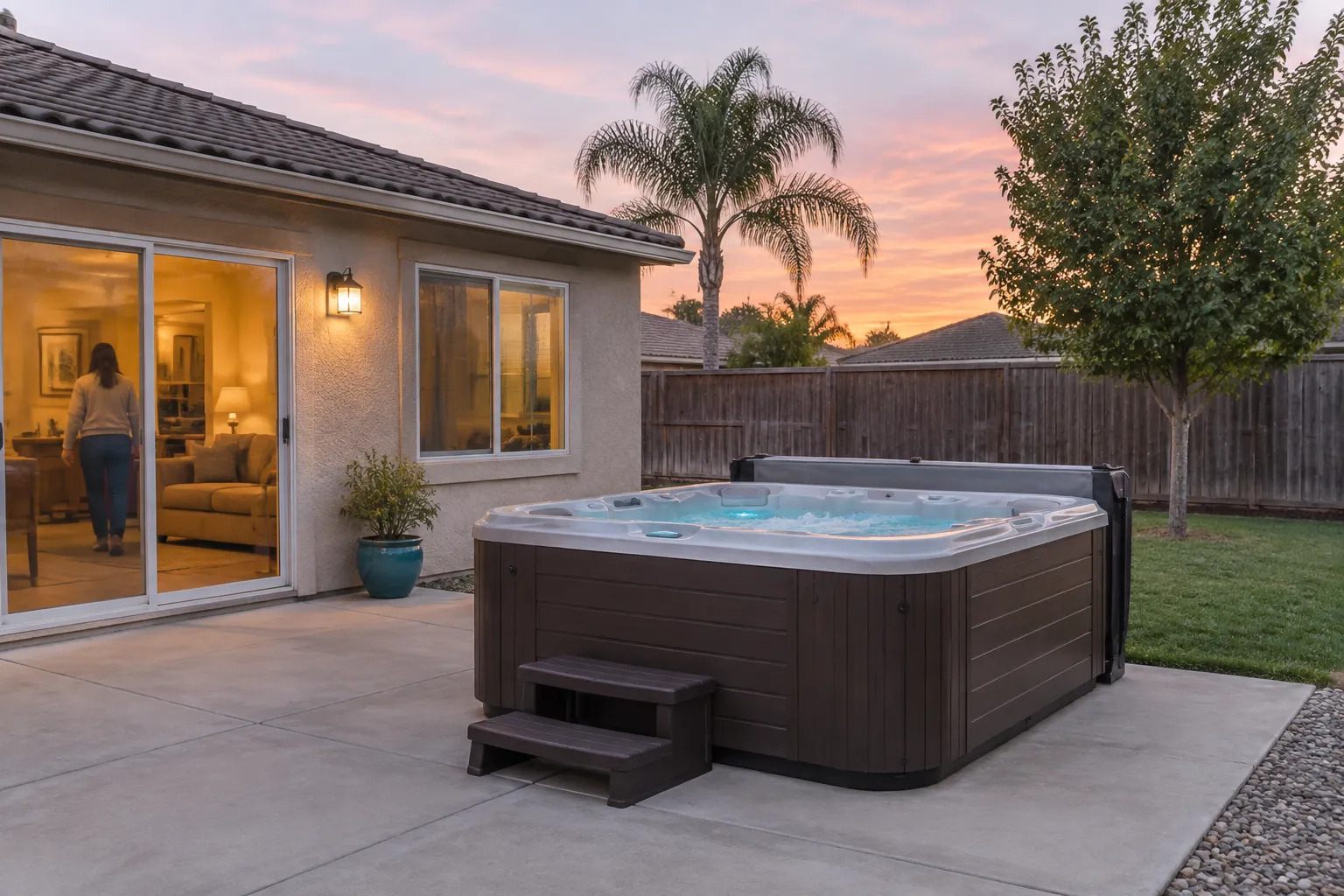
A hot tub needs its own circuit, almost always 240 volts, with ground fault protection and a disconnect you can see from the tub. The wire and breaker size come from the tub's rating plate. In California the work is permitted and inspected under the California Electrical Code, which is the National Electrical Code with state amendments. The overview of the job is on the hot tub electrician page. This guide covers what the circuit needs, step by step.
What does hot tub electrical mean for your home?
It means adding a large, dedicated load to your panel, in a place where water and electricity meet. A full-size tub is a large load. Your panel needs spare capacity, the wire needs to be sized to the load and the circuit needs shock protection. That is why it is regulated more strictly than most outlets.
Most tubs list their requirements on a nameplate: voltage, amps and whether a ground fault device is built in. Common arrangements are:
- 240 volt hardwired. A breaker sized to the tub's nameplate feeding a disconnect near the tub, then the tub. The most common arrangement for full-size tubs.
- 120 volt plug-in. Smaller tubs, using a standard-looking plug on a protected circuit at lower power. Heating is slower.
- Swim spas. Bigger loads. Treat as a larger version of the first.
Never guess. Use the nameplate and the manual, then have an electrician confirm against the code edition California is using. The 2025 California Electrical Code took effect on January 1, 2026.
What is the hot tub electrical hookup, step by step?
The standard hookup is: a breaker in the panel, cable or conduit to a disconnect outdoors, ground fault protection, then a short run to the tub's own terminals. The electrician sizes each part to the tub. They also bond metal parts as the code requires. Then the inspector checks it.
- Check the panel. Does it have room and capacity? If not, a subpanel or upgrade comes first. See upgrading an electrical panel.
- Choose the location. Clear of overhead power lines, at the distance the manufacturer and code require, on a pad that supports a filled tub.
- Run the circuit. Cable or conduit from the panel. Outdoors, buried at the depth the code sets.
- Install the disconnect. In sight of the tub and commonly at least 5 feet away, so a person in the tub cannot touch it.
- Add ground fault protection. In a breaker, a protected disconnect or a spa pack.
- Connect and bond. Hardwire to the tub terminals and bond metal parts as the code requires.
- Inspect. The tub should not be used until the circuit is approved.
The question of how to disconnect a hot tub comes up too. To work on the tub or stop it in an emergency, turn off the disconnect, and the breaker in the panel behind it. Use the disconnect for service, but only an electrician should open the terminal box.
What are the GFCI rules for a hot tub?
Ground fault circuit interrupter protection cuts power in a fraction of a second when current leaks to ground, which is what happens in a shock. Spas supplied by a branch circuit typically need it. It can be a GFCI breaker in the panel, a protected disconnect or protection built into the spa pack. Outlets near the tub are covered too.
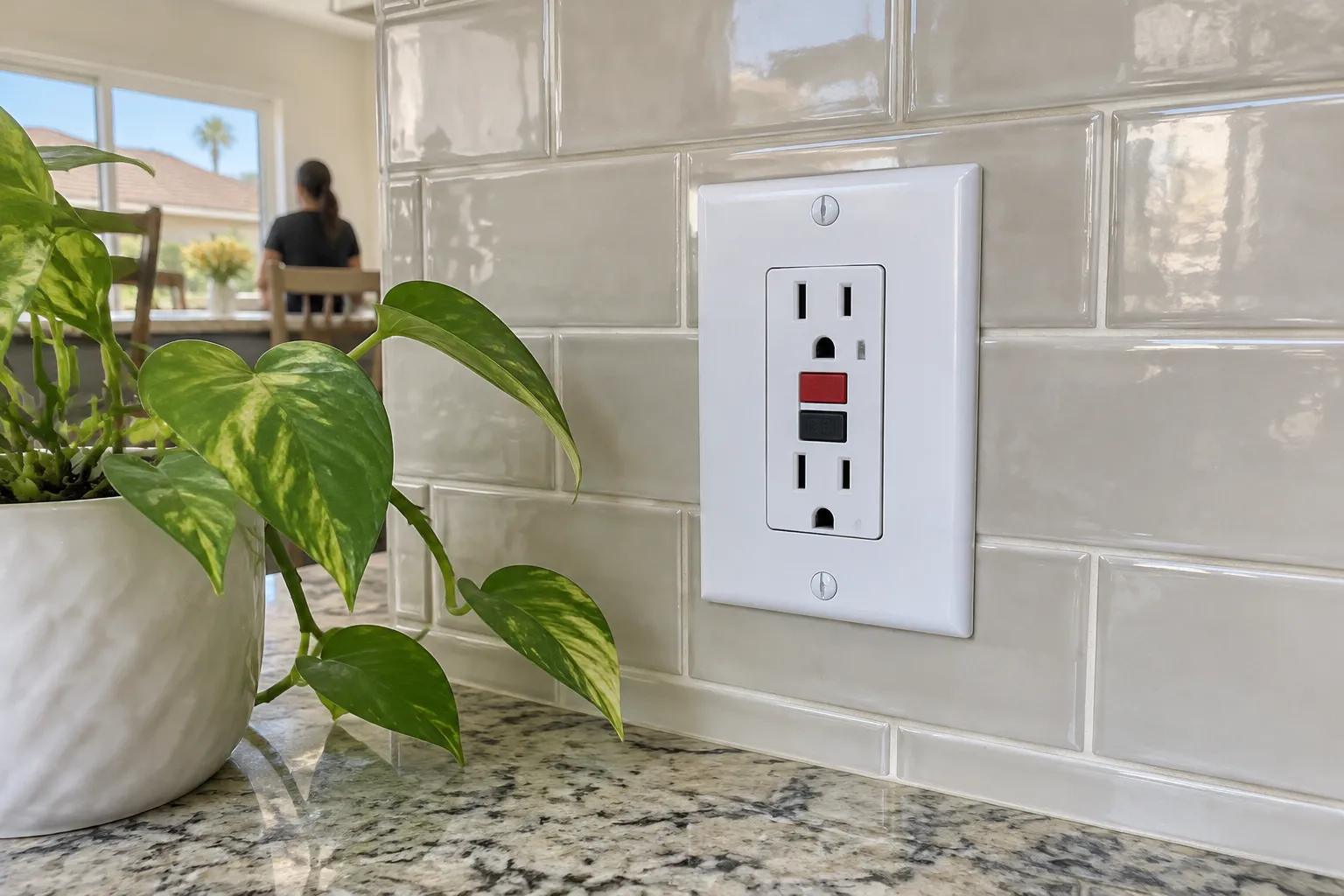
The tub's maker says what the tub has built in, and the code sets what you must add. Test the GFCI by pressing the test button on a schedule the maker gives. If it trips repeatedly, do not reset it over and over. Stop using the tub and have an electrician look. The guide to AFCI versus GFCI explains the difference between the two kinds of breaker, and GFCI outlet installation covers outlets.
How far should the disconnect be from the hot tub?
Commonly at least 5 feet away from the tub, measured by the shortest path a person could travel, and within sight. The point is to keep the switch out of reach of anyone in the water, while keeping it close enough to use in an emergency. The exact rule depends on the code edition adopted locally, so the electrician confirms it.
A cord-and-plug connection is allowed in some cases. A trade magazine Q and A on an older code edition says outdoor tubs may be cord-and-plug connected with ground fault protection and a cord up to 15 feet, and that indoor cord-and-plug is limited to certain smaller units. Treat that as background, not a rule for your house. Code editions change, and California adds amendments.
Also remember: the rating plate and manual take priority over generic advice, overhead lines can rule out a location, and a hot tub on a deck or inside a building has its own rules.
Do you need a permit for hot tub electrical work in Stockton?
Yes in almost every case. A new circuit is an electrical alteration. San Joaquin County states that a permit is required to install, alter, replace or repair electrical services and systems. The City of Stockton has its own building permit process, so confirm what it needs. Inspectors typically check the circuit before you use the tub.
California law requires electrical work for others to be done by a contractor holding a C-10 electrical license from the Contractors State License Board, so check the license number before you agree. Owners can sometimes pull a permit for their own home, but the work still has to pass inspection. Skipping the permit can cause trouble with insurance and when you sell.
What to do next
Read the tub's installation sheet and write down the voltage, amps and whether it has a built-in ground fault device. Photograph your panel, including the label showing the main breaker. Pick the location, and measure the distance from the panel. Then ask local electricians for written quotes. Prices are covered in hot tub electrical cost, and you can send details through the price request form.
Check the order of work. Panel and circuit first, then pad, then inspection, then delivery. If you are also planning a garage, ADU or EV charger, tell the electrician, because the panel has to carry the whole load. The EV charger electrician page shows what that looks like.
When to call an electrician
Call one before you buy the tub if you are unsure the panel can carry it, and call one for the circuit. California law requires a C-10 contractor for work like this for others. Call right away if the tub trips its GFCI repeatedly, you feel a tingle in the water, a disconnect feels warm or you smell burning. Stop using the tub. Call 911 for fire or smoke. This site does not do electrical work, but if you want a local electrician in Stockton to quote the job, use the form.
Questions people ask
How long does hot tub electrical work take?
A simple circuit with a short run can be done in a day. Trenching, a subpanel or a panel upgrade takes longer, and the permit and inspection add waiting time. The tub should not be used until the inspector approves the work.
What should I ask before I hire someone for hot tub electrical work?
Ask for the C-10 license number and check it. Ask who pulls the permit, what the quote includes, which ground fault protection they will use, where the disconnect goes and whether the panel has capacity. Get answers in writing from two or three electricians.
Do I need to be home for hot tub electrical work?
Someone should be there at the start to agree the location and route, and at the end for the walkthrough and inspection. The electrician needs access to the panel and the yard. Tell them about pets, sprinklers and anything buried.
What size breaker does a hot tub need?
It depends on the tub. Many full-size tubs use a 240 volt circuit, and the nameplate states the amps. The breaker and wire have to match each other and the tub. Do not choose the size yourself, and never swap in a larger breaker to stop tripping.
Can I use an extension cord for a hot tub?
No. Extension cords are not a safe or permitted way to power a spa. A plug-in tub needs a proper outdoor receptacle on a ground fault protected circuit that suits its load, within the cord length the maker gives. An electrician can install the receptacle in the right place.
Sources used
- California Department of General Services, Building Standards Commission, codes
- San Joaquin County, residential electrical permits
- Electrical Construction and Maintenance magazine, spa and hot tub cord and plug connections
- Electrical Construction and Maintenance magazine, code Q and A on the maintenance disconnect at a hot tub
- Electrical Construction and Maintenance magazine, spas, hot tubs and hydromassage tubs
Last changed