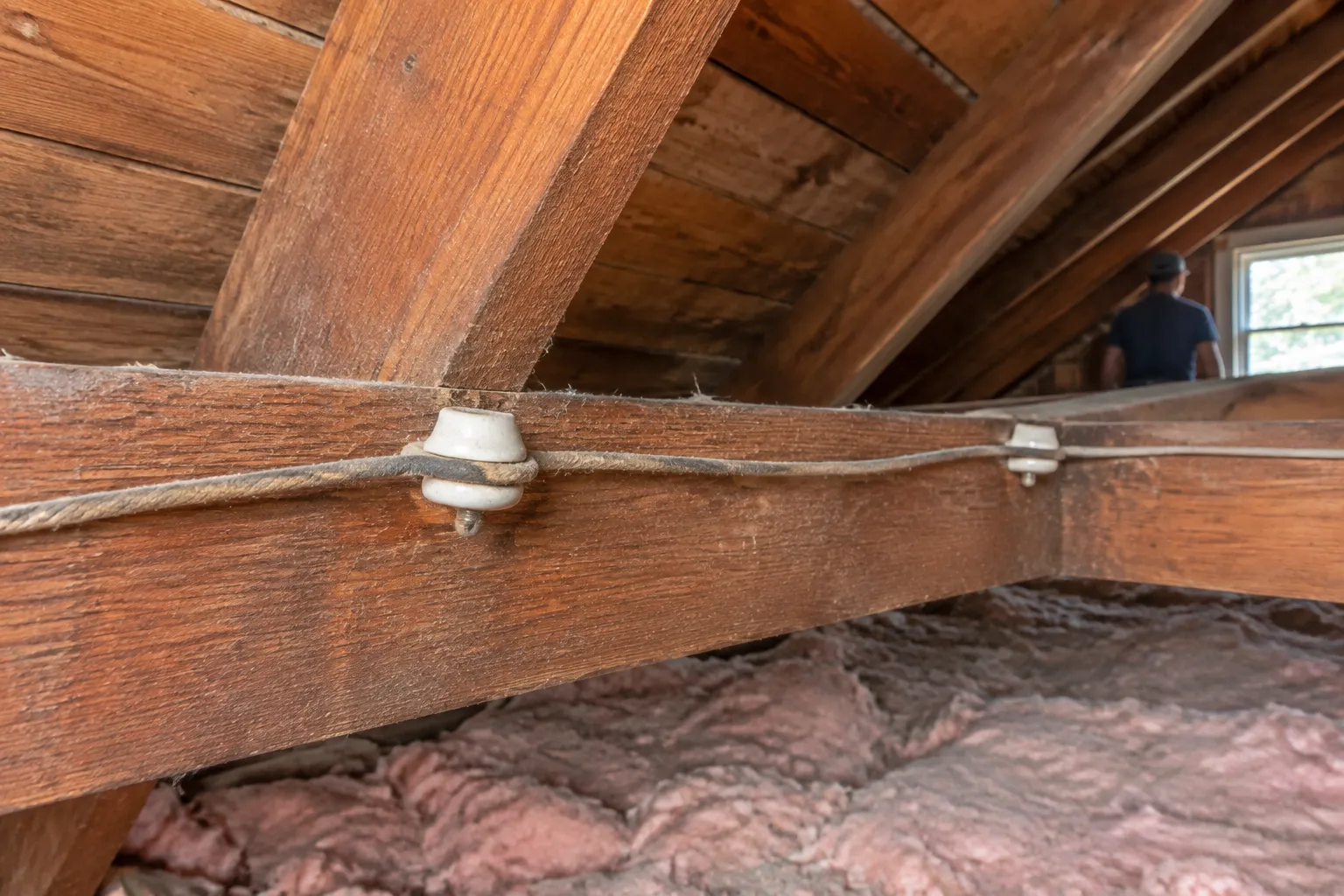
Knob and tube wiring is an early electrical system used in North America from the 1880s into the 1940s. Single copper wires run through attics and walls, held by porcelain knobs and passed through porcelain tubes. It has no ground wire, and its cloth and rubber insulation ages badly. It is not automatically unsafe, but it carries more risks than modern wiring. See the knob and tube wiring overview for how it fits with other older wiring and with rewiring.
How does knob and tube wiring work?
The system uses separate hot and neutral conductors, each a single insulated copper wire. Porcelain knobs, nailed to joists and studs, hold the wires a short distance apart. Porcelain tubes line the holes where wires pass through framing. Cloth sleeves, called loom, protect the wires where they reach a switch or fixture.
The wires hang in open air, which carries heat away. That is how the design stays cool at its original loads, and why the National Electrical Code prohibits insulation over it in most settings. Splices were soldered and taped, and some sit in the open without a junction box. That also explains why later additions are a problem: later work was often spliced onto the old wires with the wrong connections.
There is no ground wire. Modern outlets have a third hole that connects to a ground wire for safety. Where that is missing, three-prong adapters, surge protectors and electronics lose a layer of protection.
How can you tell if a house has knob and tube wiring?
You can only tell with certainty by looking, usually in an unfinished attic, basement or crawl space. Look for separate cloth-covered wires running side by side past white or brown porcelain knobs, with porcelain tubes through the wood. Behind finished walls it is invisible. Two-prong outlets are a clue, not a test.
Do not touch the wires, and do not move insulation around them to look. A home inspector or an electrician can identify the system, and a written note from them is the document an insurer or buyer will ask for. Houses in older Stockton neighborhoods, and farmhouses across San Joaquin County, may be likelier to have some. The Census Bureau's 2024 one-year survey puts the median Stockton home at about 1981, so a large share of houses will never have had it. Never assume any particular house has it or does not. A house can mix eras too: a 1930s house with a 1960s kitchen and a 1990s garage.
Is knob and tube wiring legal in California?
Existing installations are generally allowed to stay in service. The National Electrical Code, which California adopts with amendments as the California Electrical Code, allows extensions of existing knob and tube but permits new knob and tube only in special cases. The 2025 California Electrical Code took effect on January 1, 2026. Local building departments enforce it.
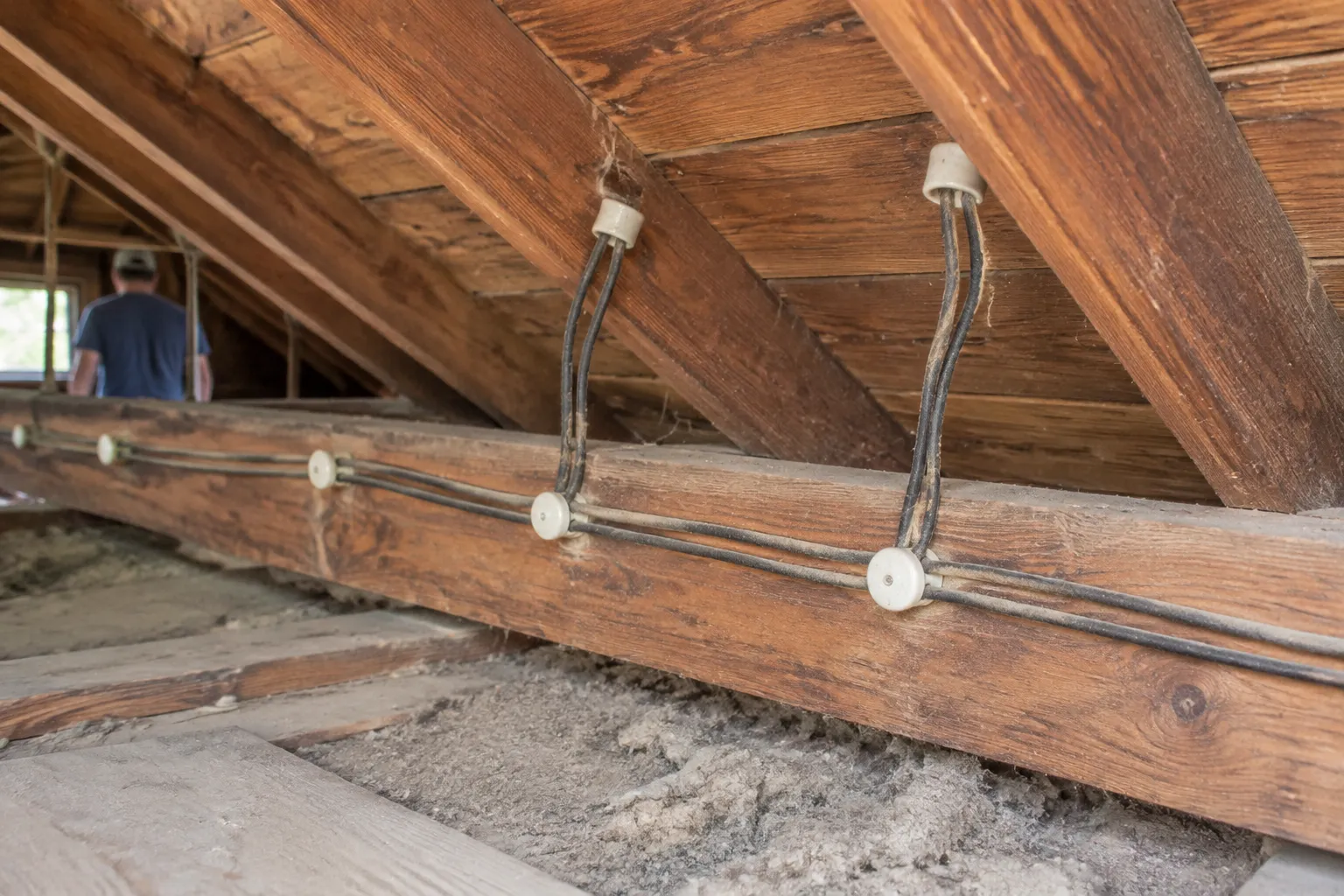
In practice the legal question is smaller than the safety question. Nobody comes to your door to order a rewire. But work you do on a house, like adding circuits, a panel change or a remodel, brings the inspector in, and that can lead to replacement. Insulation over the wires is a particular issue. The national code prohibits it, though some states, California included, allow it in certain conditions after an electrician checks the wiring. Ask a local electrician before anyone insulates an attic that has it.
What are the risks of knob and tube wiring?
The risks come from age and change. The insulation dries and cracks, exposing bare copper. Over decades, owners added circuits, replaced fuses with larger ones and spliced in new wire. Insulation placed over the wires traps heat. Each of these can lead to overheating, and overheating is how wiring starts fires.
The design also limits capacity. Safe use is generally limited to about 10 amps per circuit, so a modern household with a microwave, space heater and computers may overload them. And with no ground, shock protection is weaker. Signs of trouble include dim or flickering lights, warm outlets, a burning smell and breakers or fuses that keep tripping. The guides on breakers that keep tripping and flickering lights cover those symptoms. If you see smoke or flames, leave and call 911.
What is aluminum wiring, and is it the same thing?
No. Aluminum wiring is a different old system. Solid aluminum wire was used for branch circuits in many homes from about the 1960s to the mid-1970s, during a copper shortage. The Consumer Product Safety Commission has warned that connections to outlets and switches can loosen and overheat. Fixes include special connectors at each connection, or replacing the wire with copper. Your electrician has to check which fix suits. Connector types and wire gauges are explained on the electrical wiring wire page.
What to do next
Start with a look and a record. Note which rooms have two-prong outlets, photograph the panel and any exposed wiring from a safe spot, and write down what work was done and when. Ask your insurer what it requires, and ask a home inspector or electrician to confirm what you have. Then decide whether to keep it, repair it or replace it.
Keeping it usually means an electrician inspects it, removes insulation problems, replaces damaged sections and does not add load to it. Replacing means rewiring, which is covered in wiring knob and tube replacing and priced in rewire house cost. For a quote on your house, use the price request form.
When to call an electrician
Call a local electrician for an inspection if you find knob and tube, if a buyer or insurer asks for a report, if you plan any remodel or insulation work, or if you notice warm outlets, flickering or tripping. Call 911 for smoke or fire, and PG&E for a utility problem such as a downed line. California law requires electrical work for others to be done by a contractor holding a C-10 electrical license from the Contractors State License Board, so check the number before work starts. This site does not do electrical work. If you want Electrician Stockton Now to quote the job, use the form and local electricians can respond.
Questions people ask
Why is it called knob and tube wiring?
It is named for its two ceramic parts. Knobs are porcelain pegs nailed to framing that hold the wires in place. Tubes are porcelain sleeves set in drilled holes where wires pass through studs or joists. Together they keep the wires apart from wood and from each other, and the open air around them carries away heat.
What years was knob and tube wiring used?
It was common from the 1880s and faded out through the 1930s and 1940s, as cable with a built-in ground replaced it. Sources vary a little on the exact end date, and some houses built a bit later still had it. Treat the dates as a rough guide. The wiring in your house depends on when each part was built or changed.
What do you do if you have knob and tube wiring?
Have an electrician inspect it and tell you in writing what condition it is in. Ask your insurer what it requires. Do not add insulation over it or add load to it. If the electrician finds problems, or you plan to remodel, plan a replacement and get two or three quotes.
Will insurance cover knob and tube wiring?
It depends on the insurer and the policy. As widely reported, some companies decline new policies, charge more, or ask for an electrician's report on the wiring. Others do not mind. Ask your insurance company or agent directly, and ask what document they would accept.
Is knob and tube wiring a fire risk?
It can be, mostly because of age, damage, overloaded circuits, poor splices and insulation over the wires. Intact, unaltered wiring in open air is less of a concern than wiring that has been modified or covered. Only an inspection can tell which you have.
Sources used
Last changed