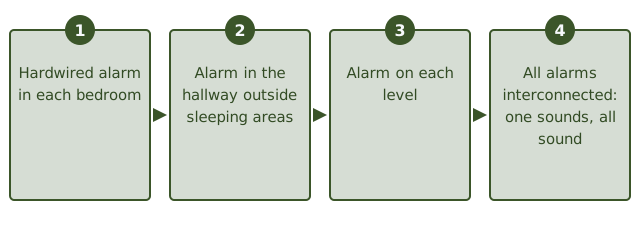
Smoke detector electrical wiring means the cable and connections that power a hardwired alarm from your house circuit and, in most homes, link it to the other alarms. Each alarm usually has a plug-in connector, a mounting plate and a battery backup. The wires inside the ceiling box carry power, and a third wire carries the signal that makes every alarm sound when one detects smoke. Old wiring, loose connections or the wrong replacement unit cause most faults. This guide sits alongside the page on wiring, rewiring and old wiring, and it explains the basics so you know what to ask a local electrician.
What does smoke detector electrical wiring look like in a home?
A hardwired alarm is fed by a cable from the house circuit, usually a three-wire cable with a ground, running to a ceiling box or the alarm's own mounting base. The alarm snaps onto the base through a plug-in harness. The wires you see are black, white, a third interconnect wire, and a bare or green ground.
In many homes the alarm circuit is shared with bedroom lighting or outlets on a single breaker. The cable runs from alarm to alarm, so the wires in each ceiling box include the incoming feed and the outgoing run to the next unit. That is why you cannot always switch off one alarm without affecting the others.
The three working wires, with the common colors:
| Wire | Typical color | What it does |
|---|---|---|
| Hot | Black | Brings 120-volt power to the alarm |
| Neutral | White | Completes the circuit |
| Interconnect | Red or orange, sometimes another color | Carries the signal between alarms |
| Ground | Bare or green | Safety path, not always connected on alarm harnesses |
Colors are common, not fixed. Older houses can have different cable, and a previous owner may have wired something unusual. If the wire colors do not match what you expect, stop and call an electrician.
How do hardwired, interconnected smoke alarms work together?
When one alarm detects smoke, it sends a signal over the interconnect wire so every alarm in the house sounds. Hardwired alarms run on house power and switch to a battery if the power fails. New homes typically have alarms wired to the building power, with battery backup, and interconnected.
The interconnect only works when the alarms are compatible. Mixing brands or models often does not work, because each manufacturer uses its own signal. Check the instructions on the packaging or the alarm itself for the list of compatible models. Some alarms also link wirelessly, which can help in a house where running new cable is hard, but the product must be listed by the State Fire Marshal for use in California.
California's rule for existing homes is looser. Battery-operated alarms are allowed in existing dwellings unless a local rule says otherwise, so a house with no hardwired alarms is not automatically out of compliance. Alarms must be approved and listed by the State Fire Marshal. See the smoke detector electrician page for the full requirements, including carbon monoxide alarms.
What is the safe way to replace a hardwired smoke alarm?
Turn off the right breaker, confirm the power is off, twist the old alarm off its base, unplug the harness, mount the new base if the new alarm needs one, plug in the new harness, attach the alarm and test it. If any step does not match the diagram in the instructions, stop.
The basic order:
- Find and switch off the breaker. If you are not sure which, switch off the whole house at the main breaker.
- Confirm the alarm is dead. Chirping or a lit light after a breaker is switched off means you have the wrong breaker or a different feed.
- Remove the old alarm by twisting it from the base, then unplug the connector.
- Check the wires for damage, scorching, brittle insulation or loose connections.
- Use a replacement that matches the interconnect type. The base and connector must fit.
- Plug in, attach, restore power and press the test button on each alarm.
- Write the install date on the unit.
If the old connector is not compatible, you may need an adapter or a new harness. Do not twist wires together with tape. Connections must be in a proper box with approved connectors.
For work on your own home, owners may be able to do like-for-like replacement. For work done for others, California law requires a contractor holding a C-10 electrical license from the Contractors State License Board. The small-job exemption now at $1,000 does not cover work that needs a permit.
Why do hardwired smoke alarms chirp, trip or false alarm?
A chirp usually means a low backup battery, an alarm at the end of its life, or a loose connection. A single alarm that keeps going off without smoke may be dirty, in a steamy or dusty place, or failing. If the whole house sounds with no smoke, the interconnect or one bad unit is likely.
Common causes and what to try:
- Low battery chirp. Replace the backup battery as the instructions say. If the alarm has a sealed battery, replace the alarm.
- Chirps after a new battery. Remove the battery, hold the test button, install the battery again. If it continues, replace the unit.
- Old alarm. The U.S. Fire Administration says to replace smoke alarms every 10 years, so check the manufacture date printed on the back.
- Dust, insects, steam. Vacuum the vents. Move alarms away from bathrooms and kitchens when the instructions allow it.
- Nuisance breaker trips. Alarms are often on an arc-fault protected circuit. A breaker that trips could be the circuit, not the alarm. See why a breaker keeps tripping.
- Whole-house false alarms. One failing unit can trigger all the others. An electrician can find which one.
Never remove an alarm and leave the home without protection. If you cannot fix the problem the same day, install a battery alarm as a stopgap.
What wiring problems make smoke alarm wiring unsafe?
Old or damaged cable, loose splices outside a box, brittle insulation, scorch marks and too many connections in a ceiling box are the warning signs. Wiring that dates from the early 1900s, such as ungrounded cloth cable or what knob and tube wiring is, may not carry a modern alarm circuit safely.
Check the condition of what you can see before you replace a unit. If the cable looks damaged, the box is full, or you find wires that do not match the instructions, ensuring a safe fix is a job for an electrician. In houses with old wiring, new interconnected alarms may be a good reason to look at rewiring part of the circuit. A broader look at wiring work is on the rewire cost page.
Also call an electrician if:
- You smell burning at an alarm or its box.
- A box is warm or discolored.
- An alarm sparks or buzzes when you touch it.
- You find aluminum wire.
- You cannot tell which wire is which.
If you see smoke, flames or sparks, leave the building and call 911. For a power line or meter problem outside the home, call PG&E.
When should you call a local electrician for smoke alarm wiring?
Call one when the wiring is old, when you want to add interconnected alarms without existing wires, when an alarm circuit trips a breaker, or when a permit applies. Also call when you are not sure which wire is which. An electrician can finish in a visit what takes a homeowner an afternoon to puzzle out.
A permit triggers alarm rules too. When your city or county issues a permit for alterations, repairs or additions over $1,000, the permit issuer may not sign off the work until the required alarms are shown to be in place and listed by the State Fire Marshal. Ask the building department that issues your permit what it needs.
To compare local options, read how to choose an electrician. If your project is wider than alarms, such as a panel swap or a whole-house safety check, see the electrical inspection guide.
Questions people ask
How long does smoke detector electrical wiring take?
Replacing one or two like-for-like alarms can take under an hour. Adding interconnected hardwired alarms with new cable throughout a house can take a day or more, depending on attic access and ceilings. A permit adds calendar time if one is needed. Ask your electrician for the time on site and the booking window.
What should I ask before I hire someone for smoke detector electrical wiring?
Ask for the C-10 license number and check it on the CSLB website. Ask how many alarms the price covers, whether the alarms are interconnected, whether they are listed by the State Fire Marshal, whether new cable is included, and who deals with a permit. Get the answers in writing before work starts.
Do I need to be home for smoke detector electrical wiring?
Usually someone aged 18 or over should be home to give access and to approve the work. The electrician needs entry to bedrooms, hallways and the panel, and may switch off power briefly. Tell them about pets, locked rooms and any alarms that chirp. Ask for the shutoff time when you book.
Can I replace a hardwired smoke detector myself?
For your own home, many owners replace a like-for-like hardwired alarm that plugs into an existing harness. Switch off the breaker, check that it is dead, and follow the instructions. Hire an electrician for new wiring, damaged cable, unclear wire colors or any job that needs a permit. If you want quotes, use the price request form, or find a Stockton-area electrician through the site.
How many smoke alarms does a house need?
Fire safety guidance puts alarms inside and outside each sleeping area and on each level, including basements. California law says alarms must be located in line with current building standards, and carbon monoxide devices follow new-construction standards or the manufacturer's instructions where feasible, so confirm with your city or county before you buy a set.
Sources used
Last changed